

Reflections from the Retreat September 2026
One of the most well-known prayers in the world is what is known as the Lord’s Prayer and you may have had to learn it as a child, at school. In response to his disciples asking Jesus how they should pray, Jesus gave them a template for prayer. He said it in the context of the sermon on the mount, and between his teaching on giving to the needy and fasting. It’s interesting to see how Christians have chosen to focus on the regular saying of the prayer – a far easier practice than doing what Jesus said on giving and fasting! Jesus also encouraged his followers to pray privately and using few words, not putting on a show for others or trying to be impressive with our prayers. For those of you who are not familiar or need a reminder of this prayer, this is one of the traditional versions of it:
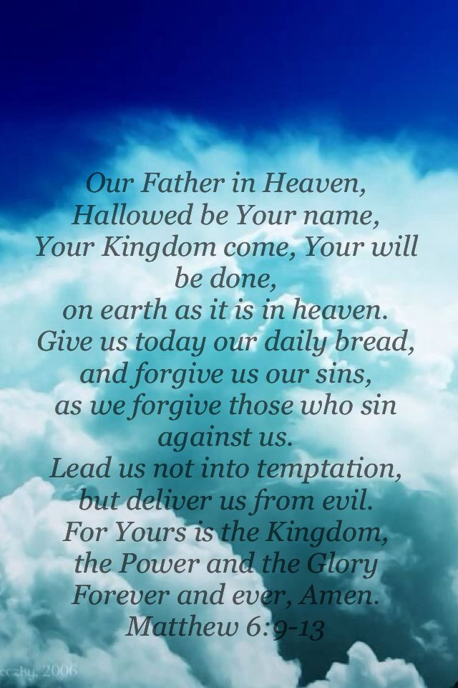
Over recent years I have been curious to learn about what Jesus actually said and did, and to explore translations of his words that have come from scholars of Middle Eastern cultures and Aramaic. This led me to the work of Dr. Neil Douglas-Klotz and his work on understanding Jesus’ words which has been a fascinating discovery. The Aramaic that Jesus spoke has layers of meaning and so each word is so much richer than a one-word translation. So, when the Bible was translated from Hebrew, based on the words of Jesus in Aramaic, into English we were getting a diluted form. For example, when Jesus talks about things being good and bad or being perfect, these words also mean ripe and unripe, mature and immature. That makes a huge difference in understanding some of the Biblical texts.
Before I moved to Grenada, I decided to learn the Aramaic version of the Lord’s Prayer as well as the translation based on Neil’s work. This was a challenge for me, as languages don’t come easily, but I now try and say it weekly, so I don’t forget it. You can read more about his work and hear this version spoken on his website. Here is the Lord’s Prayer phonetically in Aramaic, according to the work of Neil Douglas-Klotz, followed by his translation
Abwoon d’bwashmaya
Nethqadash shmakh
Teytey malkuthakh
Nehwey sebyanach aykanna d’bwashmaya aph b’arha.
Habwlan lachma d’sunqanan yaomana.
Washboqlan khaubayn (wakhtahayn)
aykana daph khnan shbwoqan l’khayyabayn.
VWela tahlan l’nesyuna
Ela patzan min bisha.
Metol dilakhie malkutha wahayla wateshbukhta l’ahlam almin.
Ameyn.
O Birther! Father-Mother of the Cosmos/ you create all that moves in light.
Focus your light within us–make it useful: as the rays of a beacon show the way.
Create your reign of unity now–through our fiery hearts and willing hands.
Your one desire then acts with ours, as in all light, so in all forms.
Grant what we need each day in bread and insight:
subsistence for the call of growing life.
Loose the cords of mistakes binding us,
as we release the strands we hold of others’ guilt.
Don’t let us enter forgetfulness
But free us from unripeness
From you is born all ruling will, the power and the life to do,
the song that beautifies all, from age to age it renews.
Truly–power to these statements– may they be the source from which all my actions grow.
Sealed in trust & faith. Amen.
You may have come across other translations of the Lord’s prayer. One of my favourites is one from New Zealand, where the Anglican church recognised some of the Māori understandings of God, and shaped the prayer accordingly:
Eternal Spirit, Earth-maker, Pain-bearer, Life-giver,
Source of all that is and that shall be,
Father and Mother of us all,
Loving God, in whom is heaven:
The hallowing of your name echo through the universe!
The way of your justice be followed by the peoples of the world!
Your heavenly will be done by all created beings!
Your commonwealth of peace and freedom sustain our hope and come on earth.
With the bread we need for today, feed us.
In the hurts we absorb from one another, forgive us.
In times of temptation and test, strengthen us.
From trials too great to endure, spare us.
From the grip of all that is evil, free us.
For you reign in the glory of the power that is love, now and for ever.
Amen.
Here in Grenada, it was interesting to see that the Anglican version of the Lord’s prayer was also slightly altered. So instead of saying ‘lead us not into temptation’ they say ’save us from the time of trial’ This is perhaps more theologically accurate because people question whether God could lead anyone into temptation. Also, in a country that has experienced hurricanes and invasions, it seems more appropriate to pray against times of trial.
When I was in the UK recently, one of the things I missed was rising with the dawn and saying the Lord’s prayer. I say it as a body prayer as the sun rises over the sea. Within Contemplative Fire, we pray body, mind and spirit, using body prayers of slow, mediative actions which I have found very moving and meaningful over the years. For those who want to try this, see our website - https://contemplativefire.org/learning-journey/prayer/lords-prayer-body-prayer/
Over the years of reflecting on the Aramaic Lord’s prayer and saying different versions, I have found a new version emerging within my own prayers. Perhaps this will be a Hummingbird version, but this is how it sounds at the moment, although it is an emerging process so it may change in the future.
Our father and our mother,
Divine mystery and faithful friend
In you we find heaven
Sacred is your name
May your love guide us
May your will be done
On earth and in our lives
Thank you for the abundance that you have given us
And may you give us what we need today in bread and wisdom
Forgive us for when we have hurt others, when we have harmed ourselves or any living beings
As we forgive those who have hurt us
Guide us back to you when we lose our way
And deliver us from evil
For you are the source and flow of all life
In you we find our potential, our purpose and our peace
To you be the glory and the honour
For ever and ever
Amen
Perhaps it is moving to a country that has a history of enslaved people, but I have become more aware of the impact of the British empire in various ways. There is a destruction of lives and natural habitats which comes with an Empire mentality of domination and control. Sadly, that mentality has coloured Western Christianity. As I heard recently on a podcast, when Christianity became the religion of Roman empire, the humble carpenter figure was turned into a victorious king figure, to fit with the Empire’s agenda and culture. This has remained and I have become increasingly aware, particularly with older hymns and certain liturgy, of the language of domination and conquering. My own spiritual journey has taken me into the opposite direction, of connecting more with the earth and seeing God in nature and us all needing to work together in a Divine ecosystem rather than conquering and overcoming. So there is no talk of kingdom and power in my Lord’s prayer but letting love be the guide and to flow in God, like a river. It may end in the same direction, but it feels very different. So when I say my daily Lord’s prayer, I can say it authentically and genuinely.
It is interesting to see the Māori prayer recognising the feminine side of God and that is certainly part of my ongoing journey and growing understanding. It will be interesting to see how it will continue to evolve. My core beliefs haven’t changed but how I understand them and how I express them have. I didn’t set out to rewrite the Lord’s Prayer, but it happened organically as I prayed and reflected on the words I was praying, so that they updated with my own spiritual journey.
It is also a prayer to say slowly and meditatively – a template to use so that we can pause at each section and add our own thoughts and prayers. What am I grateful for today? What do I need to receive today? Who do I need to forgive today?
The Lord’s Prayer was something we used to say by rote and in some churches, I get the sense that people want to say it as quickly as possible to speed up the service or before they forget the words! But to me it has become a spiritual practice. An opportunity to wonder what it actually means to me and in doing so, it has changed and I think perhaps it has helped to change me.
As my understanding of the Divine changes, so do my prayers. So, I wonder, what would your version of the Lord's prayer be?


